Better to die on your feet than to live forever on your knees.
Inscription on the Spanish Civil War Memorial, Customs House, Strathclyde.
During the first part of the 20th century, the world was in political and economic turmoil. Between the birth of my mother in 1918 and the onset of the Second World War in 1938 was a particularly dark period of history. The devastation of the Great War was still raw in people’s minds, but once again Europe seemed to teeter between peace and war, fascism and communism, democracy and dictatorship, hope and despair. Political unrest was particularly evident in Glasgow where conditions for working class people were amongst the worst in Europe. The heavy industry of Glasgow was hit hard by the depression and during this time a quarter of the workforce was out of a job. The population of Scotland fell as people like my grandfather emigrated to places like Canada, America and Australia to find work.
My grandmother Christina had taken part in the rent strike of 1915 which stopped the landlords from profiteering during the Great War. The success of this strike was held up as a shining example of the power of working-class solidarity for  years to come. Ours has always been a very politically aware and opinionated family, and my mother’s formative years were spent in politically tumultuous times. She and her young socialist friends did such things as go from door to door asking for donations of food for the Spanish people caught up in the civil war. The reception they got was often abusive from the mainly conservative Scots who labelled them communists.
Mum’s older brother Peter like many of his peers was determined to be part of the fight against fascism. He found an illegal passage to Spain aboard what was known as a potato boat. These boats smuggled food and young men to the war in Spain. When Peter failed to arrive home in the evening my grandfather smelled a rat and eventually tracked down his son. Threatening the captain with prosecution he hauled the unthankful lad home. Perhaps Peter never forgave his father for this interference in his life, but William would have seen his son for the starry-eyed idealist that he was, and not have wanted for Peter the horrors that he himself had experienced in the Indian Uprising, or the Siege of Ladysmith in the Boer War. Many idealistic young men and women from all over the world travelled to Spain to join the Loyalists fighting against the right-wing forces of General Franco. These volunteers were known as the International Brigade. During this war, over 700,000 people, mainly Spanish civilians were killed. Fifty-three young people from Glasgow were among the dead. Franco supported by troops from Germany and Italy was eventually successful and Spain became a Fascist country.

William Wilson
As I noted in the previous blog, Peter was to go on to become the secretary to the fiery young socialist James Maxton. James Maxton was one of the leading figures of the Independent Labour Party in Glasgow and elected to parliament in 1922 where he was highly regarded, even by the people with opposing views including Churchill. Like many of his colleagues in the ILP, Maxton was a pacifist and had campaigned against Britain’s involvement in the First World War and against the introduction of conscription. Maxton was imprisoned in 1916 for delivering pro-strike speeches at a demonstration to oppose the Munitions Act which was passed during this time to prevent workers, disenchanted with the war, from leaving their jobs. Maxton served in the parliament until his death in 1946 and devoted much of his political life to alleviating poverty within the city of Glasgow.


 Mary and John were married during the war in 1944. My mother’s wedding dress was a testament to her creativity with a sewing machine. It was nearly the end of the long, bleak war-years, with everything in short supply. Some of my mother’s friends were Jewish and she said they always seemed to know how to find their way around the shortages. They were able to find a precious zipper and the material for the wedding dress. They then took the leftover


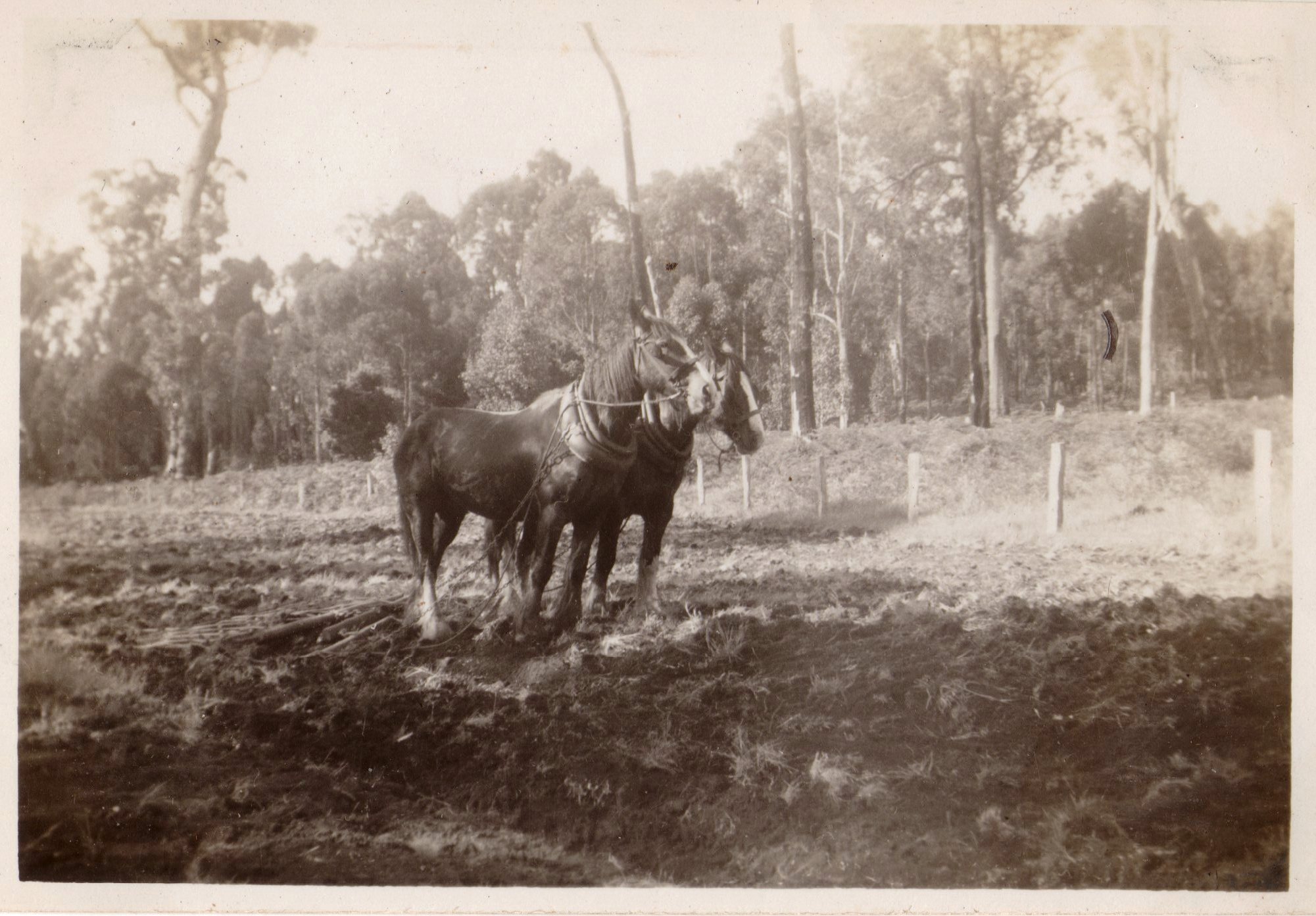
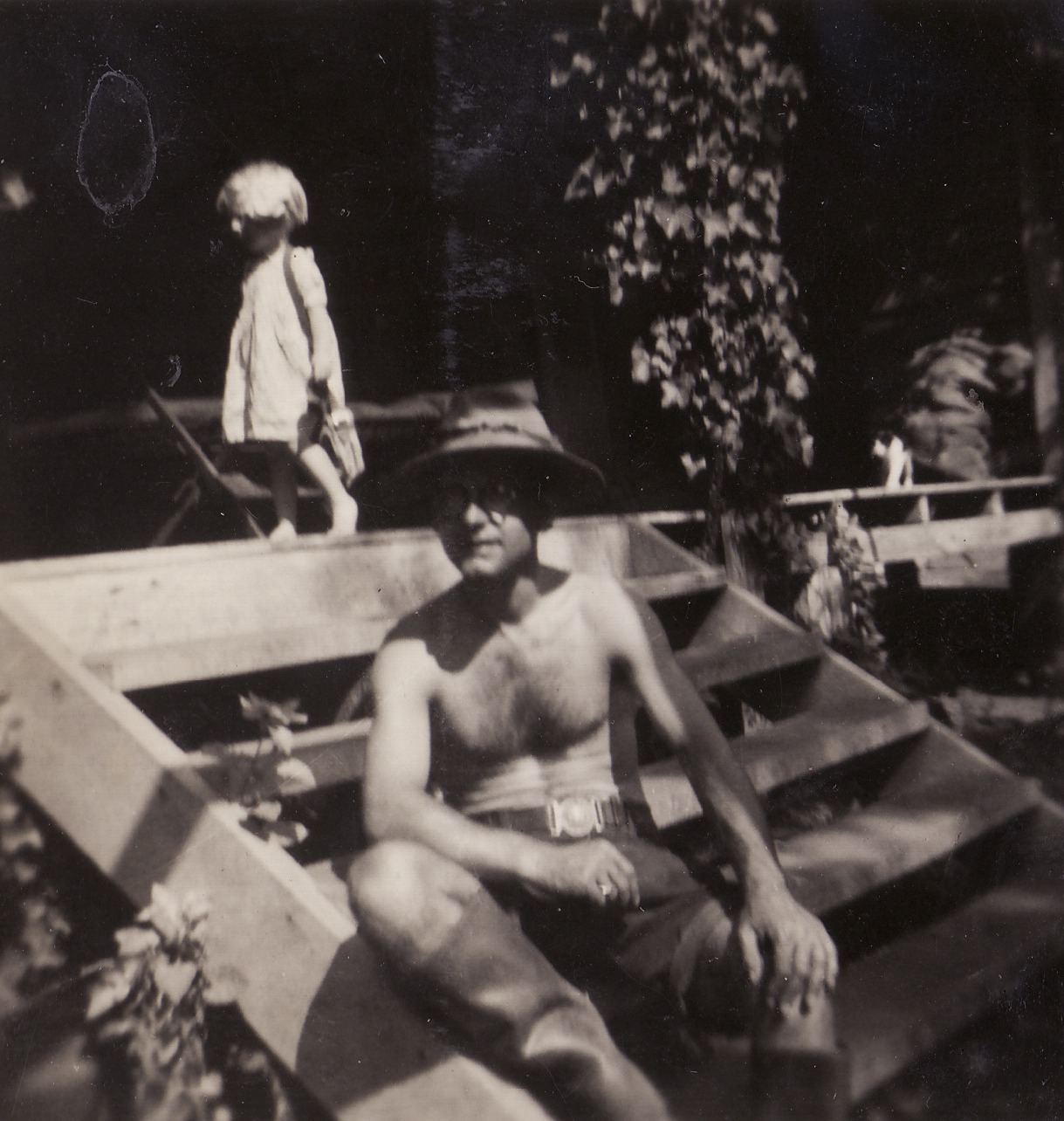
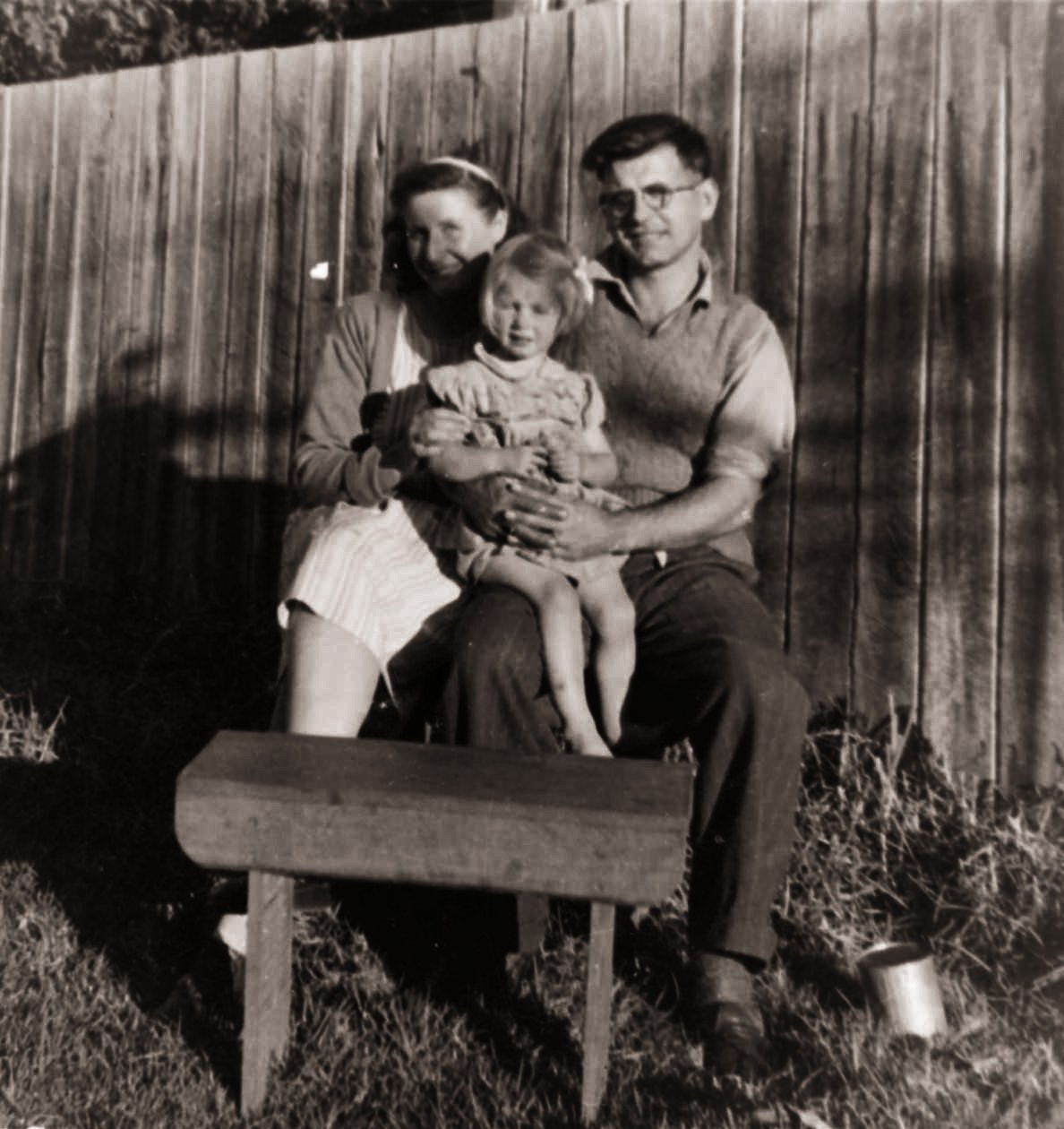
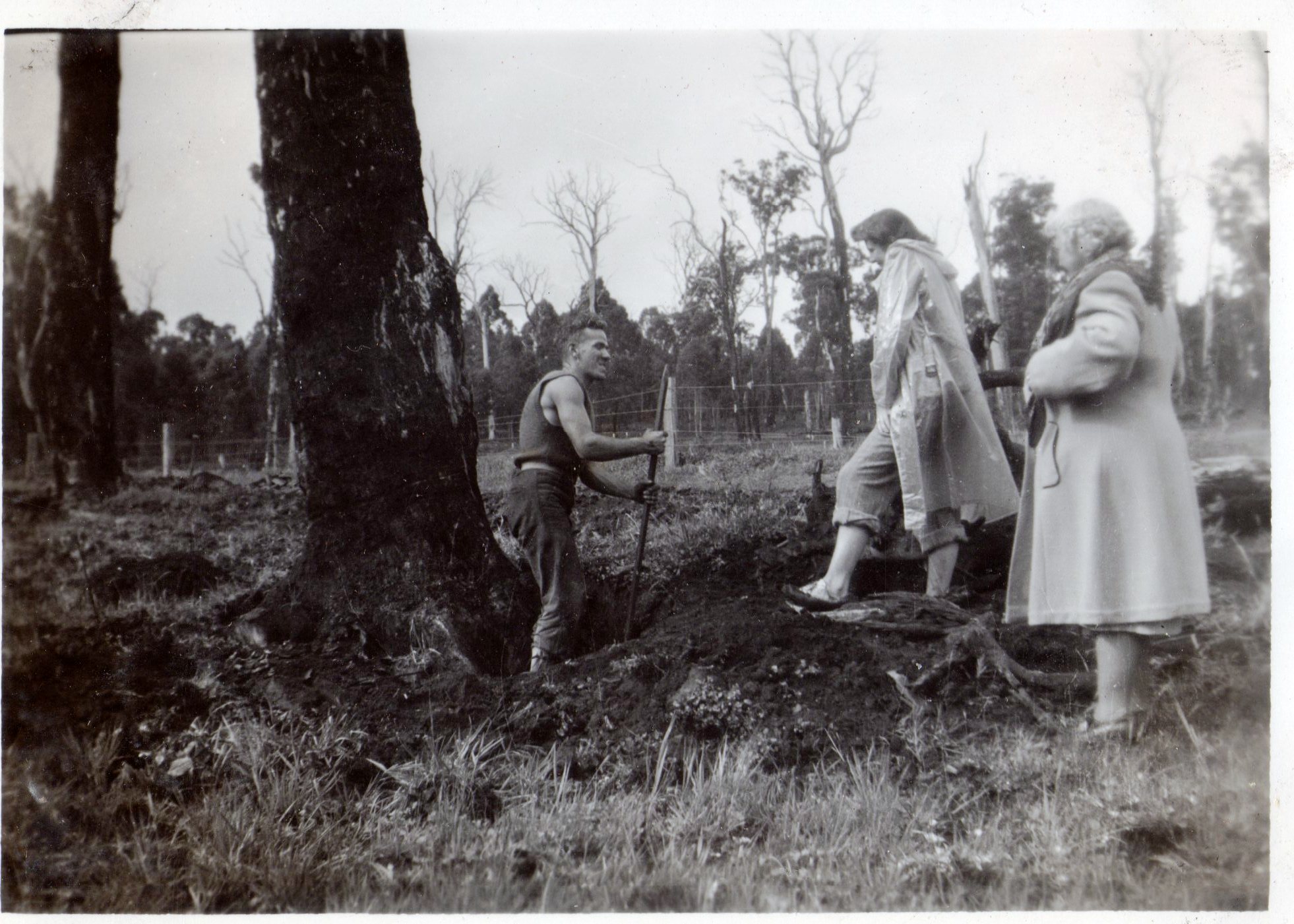
 This morning, sleeting rain replete with tiny hail stones greet me, suggesting I stay in bed and keep reading. I’m getting lots of reading done this trip. Eventually, I emerge from my little capsule like a reluctant numbat and set off to explore more of the district. (more about the numbat later) Deanmill is where my father first found work when we migrated to Australia. He would ride his bicycle to and from the farm each day but it is not a place I ever visited in the past. Today it is a small historic time warp. Row upon row of tiny identical jarrah weatherboard houses still stand, mostly in good repair so I’m guessing they are still occupied. Apart from the houses, there is a large Mill Workers’ Club but nothing else. The town is deserted as I drive around. The workers must all work elsewhere. I pass what could have been the sites of timber mills but they are guarded by large gates with forbidding signs.
 I am snooping around the old farmhouse again when I remember I didn’t take a photo of the houses in Deanmill. When I return, a woman is hanging out washing on her verandah. I stop to ask about the place. She is friendly but I don’t find out much. She said she didn’t know if the mill was still running and they rent the house from a Queensland mining company that owns the town, and much of the land in the vicinity. I’d like to ask more but it starts to pour and I don’t get invited onto the verandah so I scurry back to the car. Not for the first time, I get the impression that Manjimup is a district that has closed ranks against ‘Greenies’. But how could they think Iam a Greenie? I’m just a little old lady.
 I spent the rest of the day in the library and adjoining art gallery where I enjoyed seeing an exhibition of works depicting the six Noongar seasons. Apart from being able to keep warm, I can look up a few books and use the internet which is not available at the caravan park.
  development of more and more efficient technology to fell the forest giants. There is only a passing nod to the 65 000 year old indigenous culture it displaced or the opposition from conservationists.

